
Industrial Infrared Heating: How Does It Work and Where Is It Used?
Industrial heating plays an important role in manufacturing processes such as drying, curing, preheating, and material processing. Industrial infrared heating offers a modern solution that delivers fast, targeted, and controlled heat without direct contact.
What Is Industrial Infrared Heating?
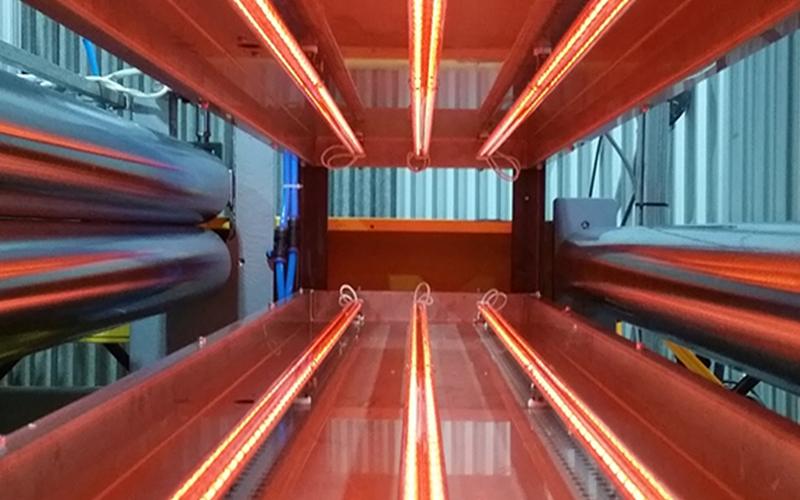
Infrared heating uses electromagnetic radiation to transfer heat directly to a material or surface. When you power an infrared heater, the heating element produces infrared radiation. The target material absorbs this radiation and converts it into heat.
Unlike conventional heating, which often heats the surrounding air first, infrared heating transfers energy directly to the product. Therefore, it works well for applications that require quick and focused heating.
How Does an Infrared Heater Work?
The working process follows a simple sequence:
- The heating system supplies electrical energy to the heating element.
- The heating element generates infrared radiation.
- The infrared energy travels toward the target material.
- The material absorbs the energy and heats up.
However, several factors can affect the heating performance, including the material, wavelength, heater power, distance, and required temperature.
Key Benefits of Infrared Heating
Industrial infrared heating offers several practical advantages. For example:
- Fast heating: Infrared heaters provide a quick heating response.
- Targeted heating: Operators can direct heat toward specific areas.
- Better control: Manufacturers can control temperature and heating cycles precisely.
- Reduced heat loss: The system minimizes unnecessary heating of the surrounding air.
- Easy automation: Manufacturers can integrate infrared heaters into automated production lines.
- Compact design: Compact heating systems work well where space remains limited.
As a result, infrared heating can help manufacturers improve process efficiency and maintain consistent heating conditions.
Where Is Industrial Infrared Heating Used?
Industries use infrared heating systems for a wide range of applications. Some common examples include:
Automotive
Automotive manufacturers use infrared heating for paint drying, coating curing, adhesive curing, and component preheating.
Paint & Coating
Infrared heating helps manufacturers accelerate the drying and curing of paints and industrial coatings.
Plastics
Manufacturers use infrared heating for plastic preheating, thermoforming, and material processing.
Printing
Infrared heating can assist printing operations by drying inks and coatings during high-speed production.
Textile
Textile manufacturers can use infrared heating for selected drying and finishing processes.
Food Processing
Suitable food-processing applications can use infrared heating for drying, baking, roasting, and surface heating.
Industrial Drying & Curing
Manufacturers can use infrared heating to dry paints, inks, adhesives, coatings, and other materials.
How to Choose the Right Infrared Heater?
Choosing the right heating system starts with understanding the application. Consider these key factors:
- Material being heated
- Required temperature
- Heating area
- Heating distance
- Heating time
- Infrared wavelength
- Power requirement
- Process and production conditions
Furthermore, a properly selected and designed infrared heating system can improve process speed, consistency, and overall heating performance.
Conclusion
Industrial infrared heating provides a versatile solution for applications that require fast, targeted, and controlled heat. For instance, automotive, paint, plastics, printing, textiles, and industrial drying operations can benefit from infrared technology.
Ultimately, selecting the right heater according to the material and application helps manufacturers achieve better heating results and process consistency.
Looking for an industrial infrared heating solution? Contact Litex Electricals to discuss your application and heating requirements.