
Every AI headline this year has been about what software can now do.
Every AI headline this year has been about what software can now do.
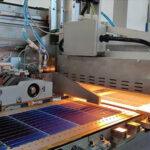
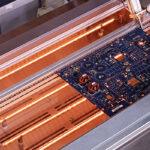
Here’s what doesn’t trend: none of it runs without hardware. Chips have to be fabricated. Circuit boards have to be cured. Servers have to be built, cooled, and packed into data centers. Somewhere in that chain, there’s almost always a process involving heat, light, or lasers — decades-old physics that nothing has replaced.
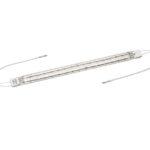
We’ve spent 40+ years in that unglamorous layer. Litex is one of India’s few remaining manufacturers of specialized halogen lamps — infrared for industrial heating and curing, laser pumping lamps for research, medical, and defense use, and studio lighting under our Cinolite brand.
We use AI tools too. But AI can’t design a custom lamp to a specific wattage for someone’s curing line. It can’t pump a laser to the tolerances a medical application needs. That capability lives in people and decades of physical iteration — not in a model.
As software gets more capable, the bottleneck shifts to hardware. And the bottleneck under hardware is manufacturing capability that took decades to build and can’t be spun up overnight.
We didn’t build this capability for an AI moment. But it turns out it’s exactly what this moment needs more of.
Curious how manufacturing leaders here are thinking about this shift — are you seeing more demand pull through from AI-adjacent hardware, or is it still early?